
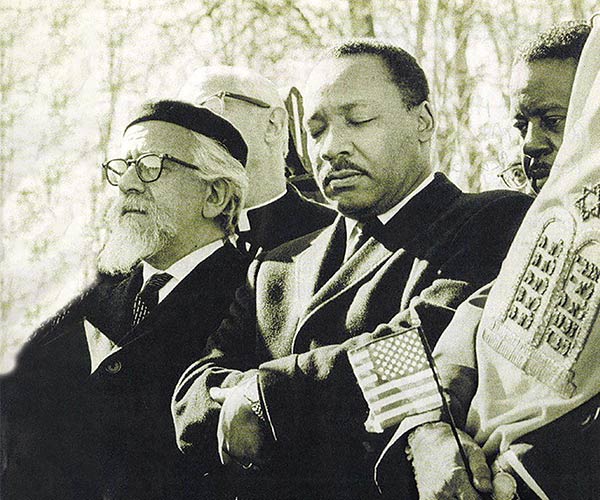
 | No liberation comes easy. In whatever form bondage may come, and whether we mean individual or collective shackles, freedom's path always entails effort, drama, uncertainty and suffering along the way. This poignant week coinciding with Dr. Martin Luther King Day 2024, and the Torah portion of Israelite freedom from Egyptian bondage, proves the point utterly – and urges us to keep walking that path as never before. |
By Rabbi David Evan Markus
Parashat Bo 5784 (2024)
Name a liberation that wasn't difficult.
Think about it. Even life's routine changes often can be challenging – never mind "liberation."
From throwing off unworthy habits and improving our character, to fights for civil rights, to slowing the pace of climate change, meaningful change is hard. Liberation from oppressions – both inner ones and societal ones – are the hardest changes of all.
Israelite freedom from Egyptian bondage. America's independence from English tyranny. Haiti's overthrow of French slave masters. The U.S. slave trade. Seneca Falls and the fight for women's rights. A century of struggle from Reconstruction to Jim Crow to MLK and the Civil Rights Act of 1968. Stonewall and LGBTQ+ equality. The shackles of our carbon-based economy. Antisemitism, Islamophobia and other hates corroding civic life.
These are the struggles of song, poetry, legend and history – and blood, sweat and tears. Each fight for freedom is hard. And it's worth reflecting on why – especially now.
This week's Torah portion of Israelite liberation from Egyptian slavery coincides with the 2024 U.S. national holiday commemorating the life and legacy of Dr. Martin Luther King, Jr. It's a most special year to reflect – and act – on freeing the bound and ensuring equal dignity and equal rights for all.
Why is it so hard? Why must it be so hard?
For Israelite liberation from Egyptian bondage, Torah's surface answer is that God "hardened Pharaoh's heart" so the Children of Israel's ultimate liberation would be impossible without divine intervention. God "hardened Pharaoh's heart" so that fully 10 plagues, each more awesome and brutal than the one before, would wrest the slaves free. Why? (Ex. 10:2):
Parashat Bo 5784 (2024)
Name a liberation that wasn't difficult.
Think about it. Even life's routine changes often can be challenging – never mind "liberation."
From throwing off unworthy habits and improving our character, to fights for civil rights, to slowing the pace of climate change, meaningful change is hard. Liberation from oppressions – both inner ones and societal ones – are the hardest changes of all.
Israelite freedom from Egyptian bondage. America's independence from English tyranny. Haiti's overthrow of French slave masters. The U.S. slave trade. Seneca Falls and the fight for women's rights. A century of struggle from Reconstruction to Jim Crow to MLK and the Civil Rights Act of 1968. Stonewall and LGBTQ+ equality. The shackles of our carbon-based economy. Antisemitism, Islamophobia and other hates corroding civic life.
These are the struggles of song, poetry, legend and history – and blood, sweat and tears. Each fight for freedom is hard. And it's worth reflecting on why – especially now.
This week's Torah portion of Israelite liberation from Egyptian slavery coincides with the 2024 U.S. national holiday commemorating the life and legacy of Dr. Martin Luther King, Jr. It's a most special year to reflect – and act – on freeing the bound and ensuring equal dignity and equal rights for all.
Why is it so hard? Why must it be so hard?
For Israelite liberation from Egyptian bondage, Torah's surface answer is that God "hardened Pharaoh's heart" so the Children of Israel's ultimate liberation would be impossible without divine intervention. God "hardened Pharaoh's heart" so that fully 10 plagues, each more awesome and brutal than the one before, would wrest the slaves free. Why? (Ex. 10:2):
| וּלְמַ֡עַן תְּסַפֵּר֩ בְּאָזְנֵ֨י בִנְךָ֜ וּבֶן־בִּנְךָ֗ אֵ֣ת אֲשֶׁ֤ר הִתְעַלַּ֙לְתִּי֙ בְּמִצְרַ֔יִם וְאֶת־אֹתֹתַ֖י אֲשֶׁר שַׂ֣מְתִּי בָ֑ם וִֽידַעְתֶּ֖ם כִּי אֲנִ֥י יהו׳ה׃ | So you will tell into the ears of your child and your child’s child how I mocked Egypt and how I displayed My signs among them, so you would know that I am YHVH. |
I'm not fully satisfied with that answer, either.
Doctrinally, I get it. In the history of religion, this liberation launched monotheism as the light of a people. The liberation had to be difficult so that freed slaves would feel liberated not by human powers but spiritual ones. Only then might they learn to live spiritually, so that their (and our) history of spiritual bondage would forever impel lives of empathy and justice.
This explanation lacks much. It glosses the tremendous cost to generations of Israelite slaves and the society as bound to bondage as their slaves. And amidst colossal societal tragedy, doctrine can be cold comfort. We don't live doctrine: we live lives. There must be a reason for freedom's difficulty that we can live with.
Judaism's wisdom tradition (Pirkei Avot 2:4) offers one:
Doctrinally, I get it. In the history of religion, this liberation launched monotheism as the light of a people. The liberation had to be difficult so that freed slaves would feel liberated not by human powers but spiritual ones. Only then might they learn to live spiritually, so that their (and our) history of spiritual bondage would forever impel lives of empathy and justice.
This explanation lacks much. It glosses the tremendous cost to generations of Israelite slaves and the society as bound to bondage as their slaves. And amidst colossal societal tragedy, doctrine can be cold comfort. We don't live doctrine: we live lives. There must be a reason for freedom's difficulty that we can live with.
Judaism's wisdom tradition (Pirkei Avot 2:4) offers one:
| מִּצְוָה גּוֹרֶרֶת מִצְוָה וַעֲבֵרָה גוֹרֶרֶת עֲבֵרָה | A mitzvah [=good deed, ethical fulfillment] causes a mitzvah. A transgression causes a transgression. |
Societies reap what we sow. Tolerance for hate fosters more. Hate that degrades others into tools, slaves or inferiors perpetuates more hate. Limiting civil rights to some validates limits and the societal blindness on which they depend.
It would take until the late 1980s to coin intersectionality to explain how one injustice or hate begets, tolerates and protects others – yet MLK knew of intersectionality in his day. He knew that antisemitism and racism are strands in a single fabric. MLK's Letter From a Birmingham Jail that decried antisemitism included some of his most famous words:
It would take until the late 1980s to coin intersectionality to explain how one injustice or hate begets, tolerates and protects others – yet MLK knew of intersectionality in his day. He knew that antisemitism and racism are strands in a single fabric. MLK's Letter From a Birmingham Jail that decried antisemitism included some of his most famous words:
 | I am cognizant of the inter-relatedness of all communities and states.... Injustice anywhere is a threat to justice everywhere. We are caught in an inescapable network of mutuality, tied in a single garment of destiny. Whatever affects one directly, affects all indirectly. |
The societal conditions of rightness and wrongness perpetuate themselves – until we change them. Tolerance for injustice fosters a learned helplessness that spreads like a cancer and ultimately risks us all – until we stop it.
That's why Torah cites Israelite liberation from Egypt as the reason for mitzvot, 36 times. We must not oppress, lest the fact of our oppression lead to more oppression. We must not pervert justice, lest the fact of past injustice fuel more. We must be the break in the chains that bind from generation to generation, century to century.
The slaver's heart, the nation's heart. Every liberation is difficult because the conditions of bondage took a long time to harden.
The rest is up to us.
That's why Torah cites Israelite liberation from Egypt as the reason for mitzvot, 36 times. We must not oppress, lest the fact of our oppression lead to more oppression. We must not pervert justice, lest the fact of past injustice fuel more. We must be the break in the chains that bind from generation to generation, century to century.
The slaver's heart, the nation's heart. Every liberation is difficult because the conditions of bondage took a long time to harden.
The rest is up to us.
 RSS Feed